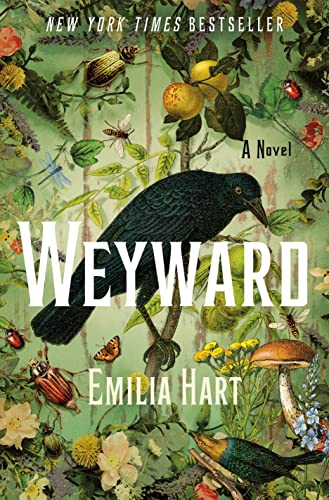
Interesting story about a female line of witches that features three women from different times: Kate who lives in 2019; Altha who lived in 1619; and Violet who lived in 1942. These women have faced challenges in their lives. Kate is married to an abusive husband; Altha was on trial for practicing witchcraft; and Violet was raped by a relative. They all have an interest in nature from insects to plants. Kate is an entomologist. Escaping from her husband after learning she’s pregnant, Kate goes to her great aunt Violet’s cottage that she inherited. There she discovers secrets that are tied into her family.
I enjoyed this story, although I thought the women-centered viewpoint was overemphasized. However, the twist at the end earned it five starts from me. This is the author’s first book, and I look forward to seeing what she writes next.
After tragedy struck three years earlier, art sleuth Carmen De Luca vowed to never work in the field again. But fifty is too young to fill her days with water aerobics and bingo, so when her former partner calls and begs for her help, Carmen gladly agrees.
Yet after their first assignment – the recovery of a rare medieval prayer book from an eccentric collector living in rural France – goes horribly wrong, Carmen ends up in the crosshairs of both the local police and a murderer!
With her target dead and the stolen book missing, she and her partner will have to pull out all of the stops to sleuth out the true killer’s identity – before their stay in France becomes permanent.
Introducing Carmen De Luca, an art sleuth with a nose for mystery and the job of locating valuable artwork stolen from museums around the world. If you love strong and resourceful heroines, puzzling mysteries, and a dash of art history, pick up Collecting Can Be Murder now!
Carmen De Luca Art Sleuth Mysteries:
Book One: Collecting Can Be Murder
Book Two: A Statue To Die For
More adventures coming soon!
These mysteries contain no graphic violence, sex, or strong language.
GUEST POST
Creating a New, Fictional World
By Jennifer S. Alderson
Starting a new series is an exciting adventure because anything is possible. Yet, it is
also a daunting task for the same reason!
After releasing my nineth novel in the Travel Can Be Murder series, it was time to
start on a new idea that had been niggling in the back of my brain for months, but I
hadn’t yet worked up the courage to try writing it.
The biggest obstacle was that I wanted to write this series in first person – something
that terrified me immensely. First person means everything is told from the narrator’s
perspective, which makes it quite restricting to plot and write in comparison to third
person. Yet it can be a delight to read – if the author does it right.
The impetus to create a new, fictional world, was being invited to write a short story
for an anthology entitled, A Bookworm of a Suspect. It took several tries before I
finally found Carmen’s voice, but I now quite enjoy writing from her first-person
perspective!
The resulting story, A Book To Die For, inspired the characters and plotlines for the
Carmen De Luca Art Sleuth Mysteries. While I had a solid idea of what Carmen did
for a living, I still had to flush out the kinds of assignments she would be given, as
well as the supporting cast of characters and types of settings she would be visiting.
ChoosingtheRightSettings
The settings of the novels in my Travel Can Be Murder series and Zelda Richardson
Mysteries were important to the storylines, and the locations often influenced the
kinds of murder mysteries my protagonists had to solve. Because travel is important
to me, I want to make certain that the setting is also meaningful in this new series,
even if the specific location is no longer as important to the storyline or plot.
So the next task I had, was deciding how to infuse these books with travel, in a
different way than I had previously done. Which is why I decided to have the settings
in Carmen’s books be restricted to “fancy places” members of high society enjoyed
gathering in – luxurious chateaus, villas, castles, museums, and yachts, for example.
Carmen does share information with the reader about where she is at, but the focus
is not on traveling around the city or country, but on a specific location or two. Not to
say that my art sleuth does not hit the road now and again!
In book one, she is inside of a French villa for the entire novel, which makes it the
least travel-oriented of the novels. Yet in book two, A Statue to Die For, she is on a
boat sailing up the Belgian Coast and makes a stop in Antwerp. So she is also
sharing her perspective on locations not central to any of the books in my other two
series. Books three and four will take readers to lesser-known locations in the
Netherlands, Belgium, Luxembourg, and Italy.
LightonArtHistory
The choice to make Carmen an art sleuth, instead of a plain ole’ detective, has to do
with my personal love of art and culture! It gives me an excuse to learn something
new about an object or artist, as well as share my passion for art with readers.
However, I had already written four art mysteries and didn’t want to rehash the same
kind of storylines. The Zelda Richardson books are quite heavy on art history, which
is why I chose to make the Carmen books lighter qua tone and level of historical
information relayed to the reader.
This also helped to simplify the research needed for each of the Carmen mysteries.
For the Zelda books, I spent six to nine months researching plot lines
because those mysteries are tied to the missing artwork’s history.
For the Carmen books, the missing object’s history is not necessarily connected to
the mystery central to the story. Which meant I only needed a few weeks to find a
great painting, sculpture, rare book, or other cultural treasure that is either truly
missing, or could be. For example, in book one, Collecting Can Be Murder, Carmen
is searching for a rare illuminated manuscript – the Avron Book of Hours – that does
not really exist. However, the art historical information Carmen relays to readers in
the book about these ancient prayer books origins, contents, and history, is.
I hope I’ve made you curious about Carmen De Luca’s adventures and hope you’ll
join her on a mission or two!
About Jennifer S. Alderson
Jennifer S. Alderson was born in San Francisco, grew up in Seattle, and currently lives in Amsterdam. After traveling extensively around Asia, Oceania, and Central America, she lived in Darwin, Australia, before finally settling in the Netherlands.
Jennifer’s love of travel, art, and culture inspires her award-winning Zelda Richardson Mystery series, her Travel Can Be Murder Cozy Mysteries, and her Carmen De Luca Art Sleuth Mysteries. Her background in journalism, multimedia development, and art history enriches her novels.
When not writing, she can be found perusing a museum, biking around Amsterdam, or enjoying a coffee along the canal while planning her next research trip.
Broadway: A Charlotte Smart Mystery by Stan Charnofsky
About Broadway
Broadway: A Charlotte Smart Mystery Cozy Mystery 3rd in Series Setting – New York, Broadway Theatre District, and Times Square Hawkshaw Press (April 13, 2023) Paperback : 248 pages ISBN-10 : 195722407X ISBN-13 : 978-1957224077 Digital ASIN : B0C2HX23KX
Charlotte Smart is back, and New York may never be the same again!
After helping to solve murder mysteries in Pennsylvania and New Jersey, 70-year-old Charlotte Smart is summoned to The Big Apple by an actor brother, Broadway, whose beautiful fashion model sister, Brooklyn, was pushed down a flight of stairs.
Charlotte, who insists she is not a police-woman, is set up in a posh hotel in Times Square, and teams with a big-city detective. It’s a heady and stirring challenge.
Is Charlotte ready for this tough new adventure?
About Stan Charnofsky
STAN CHARNOFSKY is a retired professor of psychology at California State University, Northridge (CSUN), where he taught for more than fifty years. But that’s just the tip of the iceberg. In addition to his work at CSUN, Stan also writes books, and it could be said that his life reads like one. Before teaching, in the 1950s Stan signed with the New York Yankees where he played in their farm system for six years. He later managed teams in Edmonton and St. Petersburg. Later still, Stan worked as the assistant coach at USC under the famous Rod Dedeaux, who was voted College Baseball Coach of the Century. Stan also served as head coach at CSUN from 1962-1966, with one championship team. He was the founding director of the Educational Opportunities Program at CSUN (then known as Valley State College). Stan was inducted into the CSUN Athletic Hall of Fame in 2016. This was followed, in 2018, by his induction into the USC Baseball Alumni Hall of Fame. Stan is the former President (and a current board member) of the National Association for Humanistic Psychology. In 2016, Stan received the Distinguished Teaching Award at CSUN. And of course, Stan writes books. His numerous publications include When Women Leave Men: How Men Feel, How Men Heal (New World Library) and The Deceived Society (Trafford). Stan resides in Northridge, California.
Copper Waters: A New Zealand Cottage Mystery (Annalisse Series) by Marlene Bell
About Copper Waters
Copper Waters: A New Zealand Cottage Mystery (Annalisse Series) Cozy Mystery 4th in Series Setting – New Zealand – South Island Ewephoric Publishing (October 7, 2022) Paperback : 342 pages ISBN-10 : 0999539493 ISBN-13 : 978-0999539491 Digital Print Length : 280 pages ASIN : B0BL42NBFY
A rural New Zealand vacation turns poisonous.
Antiquities expert Annalisse Drury and tycoon Alec Zavos are at an impasse in their relationship when Alec refuses to clear up a paternity issue with an ex-lover.
Frustrated with his avoidance when their future is at stake, Annalisse accepts an invitation from an acquaintance to fly to New Zealand—hoping to escape the recent turbulence in her life.
But even Annalisse’s cottage idyll on the family sheep farm isn’t immune to intrigue.
Alec sends a mutual friend and detective, Bill Drake, to follow her, and a local resident who accompanies them from the Christchurch airport dies mysteriously soon after. A second violent death finds Annalisse and Bill at odds with the official investigations.
The local police want to close both cases as quickly as possible—without unearthing the town’s dirty secrets.
As she and Bill pursue their own leads at serious cost, the dual mysteries force Annalisse to question everything she thought she knew about family ties, politics, and the art of small-town betrayal.
EXCERPT
“Nothing’s sinking in.” I pass the note to Alec and prepare myself. “Would you mind reading it aloud?”
“She and Ethan traveled together.” He gazes at me.
“Okay, we’d considered that.”
“Kate has business to conclude in New Zealand before she returns to New York. She asks me not to mention this to you until she arrives in the States but didn’t give a reason. Kate says she’ll meet you in person when she’s ready.”
“Seriously? Where does she plan to live? With me in Greenwich? The Goshen farm could be sold by now. Does she mention Jeremy finding her another place?”
Alec scans the page randomly. “No, she didn’t.”
I scratch my scalp and shake my head. “Then my sheep station trip to New Zealand is perfect timing. I have to leave now and see if I can catch her before she skips out. Ethan must know where Kate is. If it’s all the same, we’ll hang on to the tickets for our April trip, and I’ll buy my own way for this flight.” Tugging at my sweatshirt with clammy hands, I take the note from Alec and sail it into the flames, watching paper crinkle and burn on the log.
He steps forward, his chiseled profile gawking at the fire in disbelief.
“Were you ever going to tell me about Kate’s message?” A sob chokes my windpipe. “If it weren’t for Ethan’s invite, I doubt that we’d be talking about Kate.”
“Babe, I thought by staying neutral…” He twists his lips and looks at his shoes. “Seeing your reaction now; it was a mistake not to tell you.”
“That totally blows.” I ball my hands into fists. “More like you were afraid that I’d run down there to find her.” I’m mad enough to send smoke signals, so I take slower, calming breaths.
“If I’d told you… Yeah, I worried you’d run off. The ordeal in Italy, then Peter Gregory terrorizing you, and Helga has had barely enough time to settle around here. Your safety doesn’t include encouraging you to hop on a plane to another country so soon after a trauma like that. Waiting for Kate’s return felt right to me. At some point, I hope you’ll see things from my side. Kate put me in the middle, but it’s you I worry about.”
Willing myself to relax, I take his hand to get him to focus on me instead of the floor. “I know that.”
Peter Gregory, an old coworker from my past job at another gallery, is responsible for a young woman’s murder in Lecce, near the Mediterranean Sea on Italy’s eastern shore. Alec and I went to Southern Italy for a working vacation that spun us into solving more than one homicide in order for Alec to sell his dad’s Signorile Corporation, a sports car company.
“After a shower, I’ll give your mom a call from the car on the way home. I might have trouble getting a flight out on the spur of the moment, but if I do, I hope you’ll help me.”
“Anna, we should discuss this.” He catches my wrist. “I’d like to go along. Say the word, and I’m on that plane with you. Allow what’s happened with Kate to simmer. You might feel differently in the morning.”
Grasping Kate’s locket beneath my shirt, I slide the chain over my head and cup Alec’s hand, dropping the necklace there.
“Hold on to my locket while I’m gone. It’s the most precious thing I own. That way, you’ll know I’m coming back to you.” On my tiptoes, our salty kiss calls a loneliness— In a flash, two people are about to have a hemisphere drifting between them from outside influences that want to manipulate us. “Gen will be here to see Noah in a few hours, and you have him until Sunday. Let me go, Alec, and please wait for me at Brookehaven. I have to make this trip by myself. If there’s the slightest chance that Kate’s with Ethan or he knows where she is, I have to go. I’ve already lost precious time.” I start for the drawing room doors and remember something left undone. “Oh, and sorry for the sticky mess in your stable office.”
In a dead run, I’m biting a quivering lip. On the way to Alec’s bedroom suite, I send Chase a text to hold Ethan’s box and note for me at the gallery. True to form, Kate shoves us all out of our comfort zones, where I’m certain to find a disaster waiting for me to book a ticket to New Zealand in a mad rush.
About Marlene M. Bell
OLYMPUS DIGITAL CAMERA
Marlene M. Bell is an eclectic mystery writer, artist, photographer, and she raises sheep on a ranch in wooded East Texas with her husband, Gregg.
Marlene’s Annalisse series boasts numerous honors including the Independent Press Award for Best Mystery (Spent Identity,) and FAPA— Florida Author’s President’s Gold Award for two other installments, (Stolen Obsession and Scattered Legacy.) Her mysteries with a touch of romantic suspense are found at her websites or at online retail outlets.
She also offers the first of her children’s picture books, Mia and Nattie: One Great Team! Based on true events from the Bell’s ranch. The simple text and illustrations are a touching tribute of compassion and love between a little girl and her lamb.
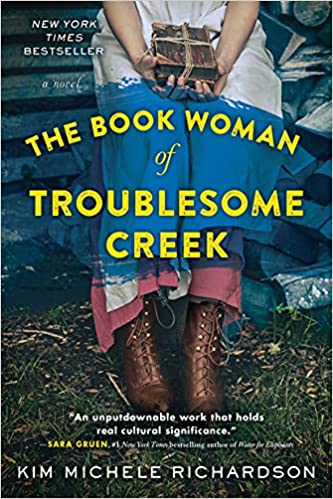
The main character, Cussy Mary Carter, also known as “Bluet,” lives in Troublesome Creek, Kentucky in 1936. She is one of the last of a line of blue-skinned people who existed then. This well-researched book follows Cussy as she joins the Pack Horse Librarians to deliver books and reading material throughout the town. Her father, a coal miner and widower, wants her to find a husband and uses a courting candle to attract one. Unfortunately, the man who asks for her hand abuses her and dies during a fit of anger. Because her husband was influential in the town, her “pa” makes a deal with the doctor who comes to their home to hide the body. In exchange, he allows the doctor to examine and test Cussy hoping to find out the cause of Cussy’s blue color and to correct it.
When the cause is determined to be a genetic condition and the doctor treats Cussy with a cure that makes her white, the medicine makes her sick and only lasts a day for each dose. Her father wants her to stop taking it, but she refuses, believing that it will change people’s opinion of her and that the side effects will resolve in time.
As Cussy continues her work bringing books to the townsfolk on her mule, she is pleased when people greet her and look forward to her arrival. Most of the people she serves are sickly and very poor. A young boy who she becomes close to dies from starvation despite her attempts to bring him what little food she can manage.
Two women in charge of the library project consider her “colored” and treat her as below them even when she takes the medicine that makes her white. Besides her book patrons and father, the only other person who views her as an equal is a newcomer to town named Jackson Lovett.
After a young woman, one of her book patrons, dies following childbirth and asks her to take the baby, Cussy discovers that her father has been killed in a mining accident. The day he left, he lit another courting candle. Lovett is the man who responds to it, declares his love for Cussy, and asks her to marry him even though she no longer takes the medicine for her skin condition and has a baby daughter.
On her wedding day, after the ceremony, the sheriff and a group of his supporters put Lovett in jail for marrying Cussy because of a law banning interracial marriages. The doctor tries to persuade them that Cussy is white but suffers a genetic condition that makes her skin appear blue.
The book doesn’t have the happiest of endings and is a sad story, which is why I didn’t give it 5 stars. Readers who enjoy less depressing tales might not find it to their taste. However, it’s an interesting novel based on true historical facts, and the author has written a sequel called The Book Woman’s Daughter.
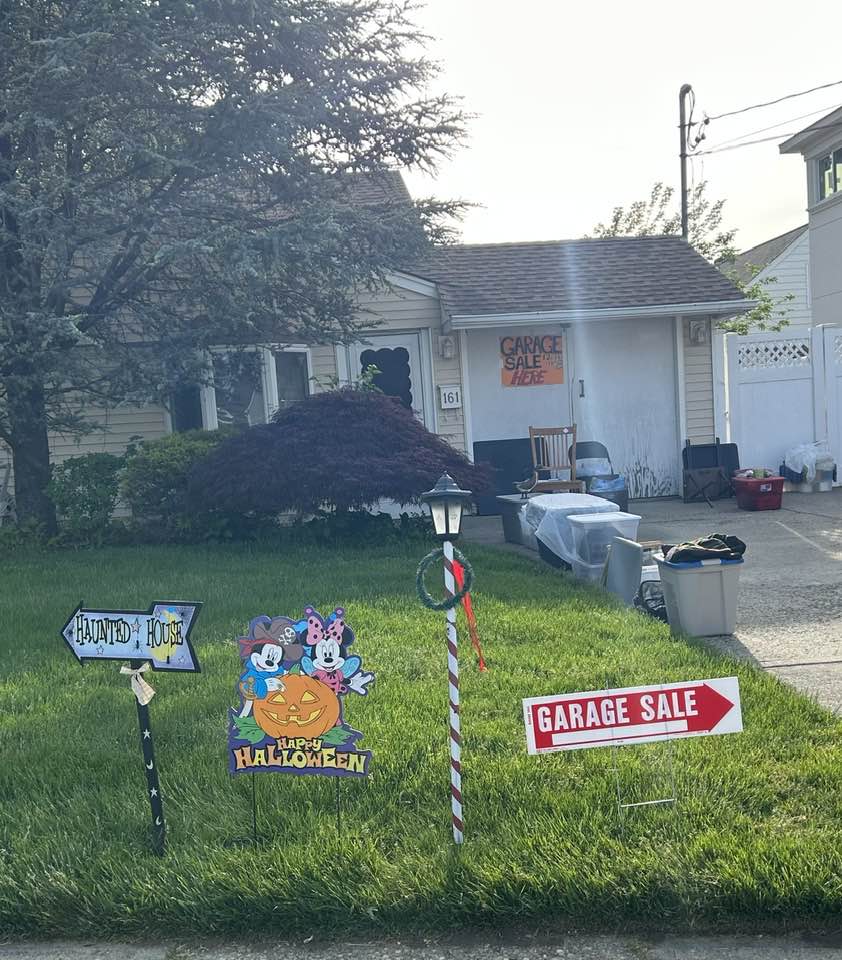
It’s been a crazy May. We celebrated my birthday and my husband’s, the one-year anniversary of the loss of my Stripey cat, had a garage sale at our house, and found a new home in South Carolina.
I wrote a blog post from Stripey’s point of view up on Rainbow Bridge about the year he’s been away from us. You can read it here: https://wp.me/p7XcB0-1il.
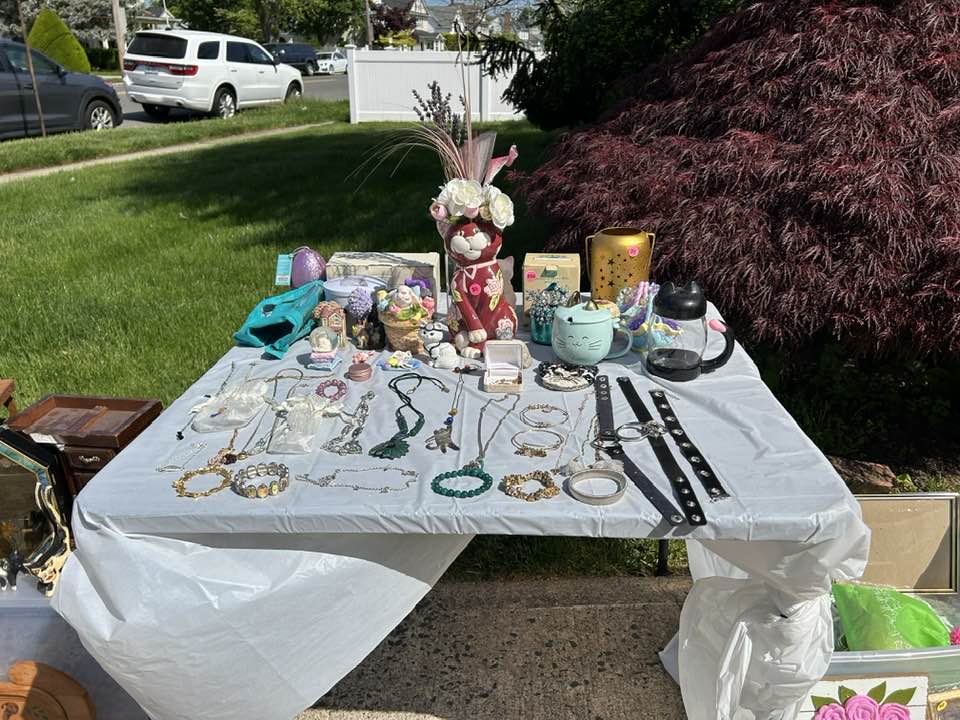
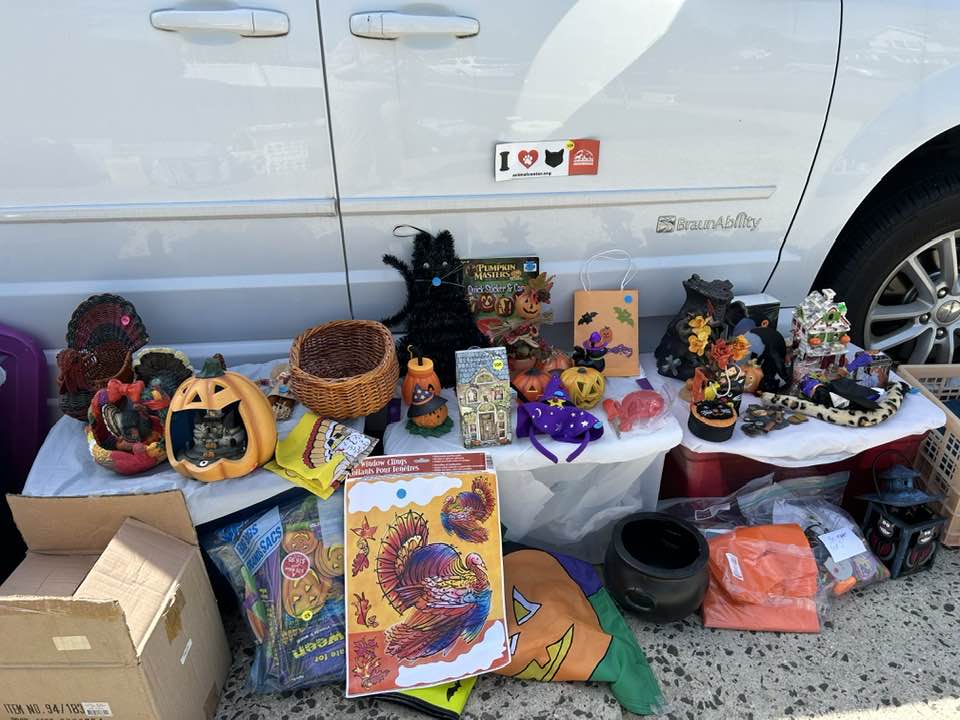
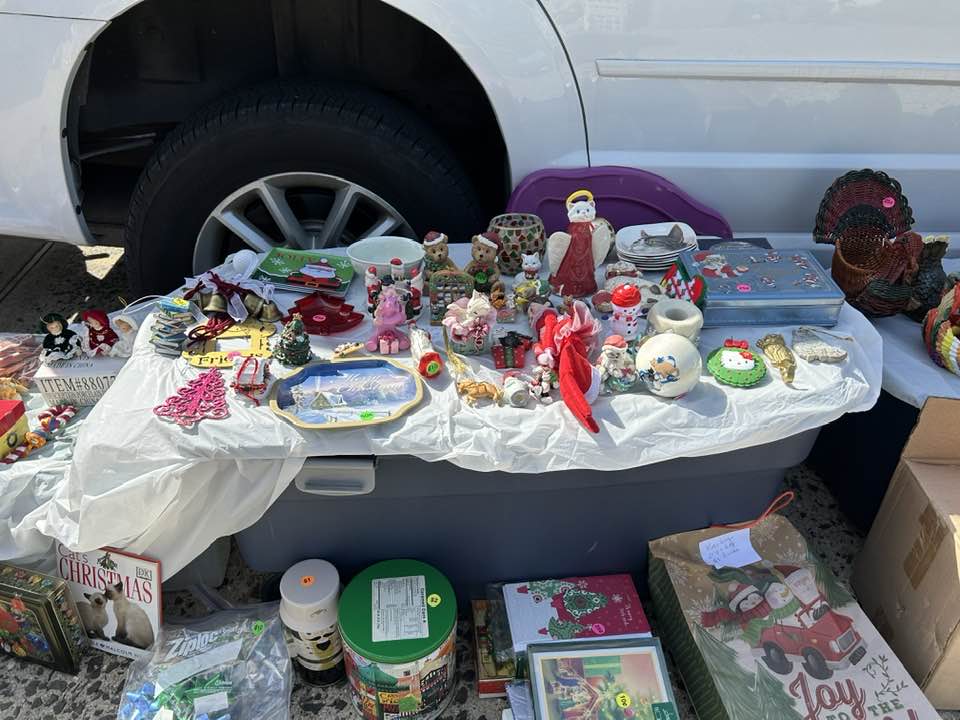
Our garage sale was a lot of work, but we were able to get rid of many of our items that we hope found a good new home.
We recently came home from a second house-hunting trip to Charlotte, North Carolina, but also visited South Carolina where we found a home at the Edgewater Community that features a golf course, lake, clubhouses, a pool, and 70 activities a month arranged by an activity director. They are also opening a restaurant by the golf course. While we aren’t as close to stores and other places, the home prices are reasonable, and we’re an hour from Charlotte. My daughter will have an apartment upstairs, and we’ll finally have more than one bathroom and a dining room. We will also have a screened-in porch for the cats, an office for my husband, and a sitting room for me.
We’re still going to be on Long Island for a bit because they’re building our home which takes approximately 9-11 months. This is our lot.
My book news is that I’ve finished and submitted my third Buttercup Bend cozy mystery, The Case of the Llama Raising Librarian, to my publisher. I’m still waiting on the cover and an editor, but I hope the book will be published this summer.
My June newsletter will be out before Memorial Day. New subscribers are eligible for special giveaways. You can subscribe at https://debbiedelouise.com.
A 30-year-old skeleton. A missing girl. Can a community police officer read the tea leaves or will a deadly secret remain buried for ever?
Sergeant Keya Varma is delighted with her new part-time role as the Cotswolds’ Rural Engagement Officer. She’s also fulfilling her dream of opening a small neighbourhood café. But she gets herself into a stew with renovation works when builders unearth a young girl’s remains.
While Keya and her police colleagues gain ground reviewing the unsolved disappearance of a local girl, her brief taste of success turns to dust when a friend is found dead at her tea shop. Confusion over identities threatens to bury the investigation and our junior police officer is worried that justice won’t be served.
Can Keya dig into the mystery and uncover the real culprit?
Earl Grey and Shallow Graves is the first book in The Waterwheel Café series. If you’ve enjoyed the Dotty Sayers Antique Mystery series, then you’ll love meeting some of your favourite characters and making new friends in Victoria Tait’s intriguing British cozy mystery.
Buy Earl Grey and Shallow Graves and unearth a killer today!
About Victoria Tait
I was born and raised in Yorkshire, UK, and never expected to travel the world. I’ve drawn on my experiences following my military husband to write cozy murder mystery books with vivid and evocative settings. My determined female sleuths are joined by colourful but realistic teams of helpers, and you’ll experience surprises, humour, and sometimes, a tug on your heartstrings.
I hope you enjoyed Keya’s first book. Why not join her and her friends as they solve more mysteries in my Dotty Sayers Antique Mystery series, also based in the Cotswolds. Visit https://www.amazon.com/dp/B09TMJFL7L
Do you like tea, cakes and books? Then why not join our TeaCozy Club for regular news and updates, and receive your free book gift at VictoriaTait.com
Who doesn’t like tea, cake, and a slice of murder?
This past Mother’s Day weekend, I had a garage sale at my house. From my experience, I’m sharing some tips that might help you if you’re planning your own sale.
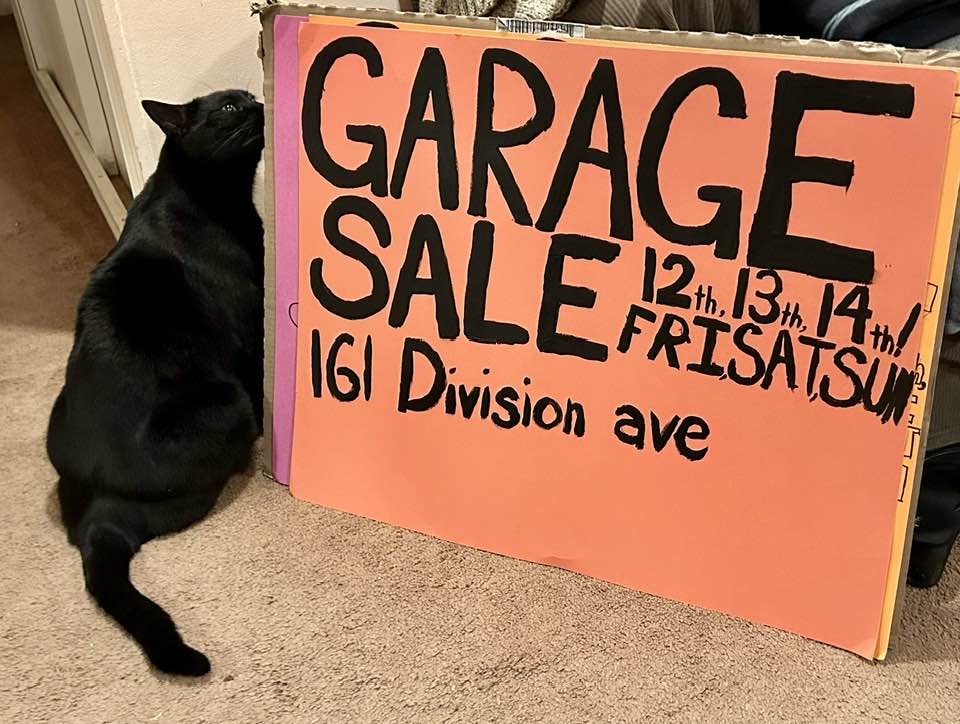
Limit the days and hours of your sale. We had our sale over 3 days, Fri/Sat/Sun on Mother’s Day weekend from 9-6. It was exhausting. The best day of the sale was the first day,Friday. The worse day was Sunday. I would recommend either a one or two-day sale, no more than six hours a day considering that it takes time to set up and take down each day.
Have Plenty of help on Hand. My husband, daughter, and two teens helped me. Besides moving things in and out of the garage and setting up displays, people are needed to take shifts at the table and to greet customers and process payments. Items need to be marked with prices and replaced when they sell.
Advertise in papers, on social media, and with signs and posters. I placed an ad in the local paper and promoted the event on my Facebook page and on a local Facebook group. My daughter made signs she put up around the neighborhood. I also put up a poster at church. I had one person come in response to the Facebook ad and the photos I ran with it of the items available. However, most of the people who came to the sale were walking the neighborhood and just saw the stuff outside.
Check the weather report. We were lucky that we had no rain during the 3-days of our sale. But you might want to schedule a rain date for your garage sale. Also, if it’s sunny or even partly cloudy, you should apply sunscreen. My husband got sunburn because he didn’t.
Record all transactions and payments. Taking a suggestion from a book about garage sales, we used a fanny pack to hold our cash and change. We recorded the amount we started with and then each transaction – what was purchased and what it cost. We tallied the figures up each day and then the grand total at the end. We then checked it against what was left in the fanny pack.
Take Breaks and assign shifts. Be sure to take rest breaks to eat and nap if necessary. Since I’m a morning person, I took the morning shift and my daughter took the afternoon shift.
Have bags and packing material nearby. We had bags available for people to help carry their purchases. However, we could’ve used tissue paper and other packing material. We improvised with newspaper for the delicate items.
Group items by categories and in sets. We displayed our holiday items, baby and children’s toys, books, and other items together and kept the more expensive items near our checkout table. Items that came in sets such as ornaments were sold together.
Don’t expect to make money. Considering the amount of time and effort, you shouldn’t expect much of a profit. Your goal should be to get rid of unwanted items and hope they find a new home where they can be used.
Learn what’s “hot” from each purchase. As you sell items, observe which ones seem to be more popular. For instance, we almost sold out of my daughter’s crochet yarn, needles, and craft items. We also did well with gardening items. Books and magazines were the least popular items, and we also didn’t sell many stuffed animals or baby items. We didn’t have any tools to sell, but we had requests for them.
Have fun. While there’s a lot of hard work in organizing and holding a garage sale, there’s the opportunity to meet neighbors and see friends. I had a nice surprise when an old friend who I had reconnected with on Facebook but hadn’t seen in years dropped by.
Don’t regret what you sell. I found it hard to part with some things, even though I didn’t have much use for them. But two sales, in particular, made me realize that it was worth it. A young girl with her mother chose the mermaid doll my daughter had loved when she was a child. The doll was in excellent condition. I was happy to see the girl walking around hugging the doll. I was also happy that a patron I knew from the library took home one of my cat tunnels. Afterwards, she shared with me a photo of her cat in the tunnel.
A Novel Disguise (A Lady Librarian Mystery) by Samantha Larsen
About A Novel Disguise
A Novel Disguise (A Lady Librarian Mystery) Historical Cozy Mystery 1st in Series Setting – Imaginary English village, 1784 Crooked Lane Books (May 16, 2023) Paperback : 320 pages ISBN-10 : 1639103465 ISBN-13 : 978-1639103461 Digital ASIN : B0B9WJ8FFT
When Miss Tiffany Woodall assumes the identity of her half-brother after his death, she realizes she isn’t the only one with a secret to hide in this historical series debut, perfect for fans of Deanna Raybourn and Sherry Thomas.
1784 London.Miss Tiffany Woodall didn’t murder her half-brother, but she did bury him in the back garden so that she could keep her cottage. Now, the confirmed spinster has to pretend to be Uriah and fulfill his duties as the Duke of Beaufort’s librarian while searching Astwell Palace for Uriah’s missing diamond pin, the only thing of value they own. Her ruse is almost up when she is discovered by Mr. Samir Lathrop, the local bookseller, who tries to save her from drowning while she’s actually just washing up in a lake after burying her brother.
Her plan is going by the book, until the rector proposes marriage and she starts to develop feelings for Mr. Lathrop. But when her childhood friend, Tess, comes to visit, Tiffany quickly realizes her secret isn’t the only one hidden within these walls. The body of a servant is found, along with a collection of stolen items, and someone else grows mysteriously ill. Can Tiffany solve these mysteries without her own disguise being discovered? If not, she’ll lose her cottage and possibly her life.
GUEST POST
10 Facts About Crime in 1784 England That Are to Die For—Literally
By Samantha Hastings
There were over 200 hanging offenses.
In 1800, Jane Austen’s aunt, Mrs. Jane Leigh Perrot, was accused of shoplifting lace and could have been sentenced to death if she’d been found guilty. After a six-hour trial, Mrs. Perrot was found innocent. Stealing something worth more than five shillings from a shop was a hanging offense. Other offenses included: impersonating an army veteran, sodomy, sheep stealing, murder, damaging Westminster Bridge, and many more.
Trials only lasted one day.
The first criminal trial to last longer than one day was in 1792. Until 1848, the suspect was assumed to be guilty and the police magistrate’s job was to prove it with evidence and witness testimony. They did not look for proof of the suspect’s possible innocence and neighbors were encouraged to ‘inform’ on each other. If the person was found guilty, the informer could collect a part the fines.
Executions happened within two days of conviction.
In 1784 England, you’d better pray that the local jury got their verdict right and that the judge sentenced you correctly, because justice was swift and death swifter. Both men and women were hung. However, the judges and juries were always men. Women had very few rights under the law. Before the age of one and twenty, women were assumed to be their father’s property. If a daughter’s purse was stolen, the father was the victim of the crime. The What-not, or Ladies Handbook of 1859 explains that all a woman “has or expects to have becomes virtually the property of the man she has accepted as husband.”
You could wait months for your trial in the country.
In London, trials and sentencing happened quickly, but in the country, a prisoner could wait for almost a year for an assizes judge to arrive in the county for the trial. That’s a long time to be in the local jail and there was no remuneration in the unlikely event you were found to be innocent.
Aristocrats could be sentenced to death.
Peers definitely had more legal privileges than the common man; and women even fewer. However, if an aristocrat was found guilty of murder, they could be hung. Duels among gentlemen of quality (the aristocratic class) were usually not considered murder until the 1840s; after then, you would have to travel to the continent to duel.
You couldn’t testify at your own trial.
At trials, the accused was not allowed to speak in their own defense until 1898. Daniel Pool explains in What Jane Austen Ate and Charles Dicken’s Knew that the accused could not see ‘the written record of evidence” against themselves until 1839. Not even your lawyer in a felony case was permitted to give a speech to the jury, nor to cross-examine witnesses.
Executions were considered entertainment.
A hanging could draw crowds of thousands. The executions of a husband and wife, who were murderers, drew over thirty thousand people in 1849. Public executions did not end until 1868. In A Novel Disguise, the scaffold is built in the main square and most of the village turns up to see the trial and the subsequent hangings.
You were punished after your death.
Following the execution, the criminal’s body was either given to a surgeon to dissect, or hung in chains in a gibbet, usually at a cross roads. A gibbet was an iron cage to hold the decaying body. This was the practice until 1832. One of the reasons behind this macabre practice was that showing the skeleton of a criminal was thought to deter others from committing crimes.
There was no formal police force in small towns.
In 1750, John and Henry Fielding founded the Bow Street Runners in London, but they were more private detectives than a formal police force. There was “the watch” that had existed since Charles II’s reign (1660-1685). They shouted the time and the weather. The watch also patrolled the streets with a noise-making clacker, cutlass, truncheon, and lantern.
Country constables weren’t paid.
In the country, the constable was chosen yearly by the local justice of the peace, like Mr. Samir Lathrop in A Novel Disguise. It was not a paid position. The constable’s duties were to keep the peace and apprehend wrong-doers. They typically had another job or profession. Mr. Lathrop owns a bookshop. In 1829, London began having full-time and salaried constables; and not until 1856 for the countryside. The original police force was located at Scotland Yard and had over 3,000 men who wore tall stiff hats that could be used to stand on to peer over fences. A very useful feature!
Enjoy a 18th century murder trial with an assizes judge and a local jury of twelve men in A Novel Disguise by Samantha Larsen.
About Samantha Larsen
Samantha Hastings met her husband in a turkey sandwich line. They live in Salt Lake City, Utah, where she spends most of her time reading, eating popcorn, having tea parties, and chasing her four kids. She has degrees from Brigham Young University, the University of North Texas, and the University of Reading (UK). She’s the author of: The Last Word, The Invention of Sophie Carter, A Royal Christmas Quandary, The Girl with the Golden Eyes, Jane Austen Trivia, The Duchess Contract, Secret of the Sonnets, The Marquess and the Runaway Lady, and A Novel Disguise. She also writes cozy murder mysteries under Samantha Larsen.
The Ghost Goes to the Dogs (Haunted Bookshop Mystery) by Cleo Coyle
About The Ghost Goes to the Dogs
The Ghost Goes to the Dogs (Haunted Bookshop Mystery) Paranormal Cozy Mystery 9th in Series Setting - Rhode Island Berkley (May 2, 2023) Mass Market Paperback : 320 pages ISBN-10 : 0425255492 ISBN-13 : 978-0425255490 Digital ASIN : B0B8GC8YHT
A stray dog leads bookseller Penelope McClure and her gumshoe ghost on a chase for a cunning criminal in this brand-new entry in the “UTTERLY CHARMING” (Mystery Scene) Haunted Bookshop Mysteries from New York Times bestselling author Cleo Coyle.
Pet Mystery Week brings brisk business to Penelope’s Rhode Island bookshop, but a real mystery comes barking at her door when a lost dog turns up in a panic. Pen and her son Spencer follow the furry fugitive to a wooded area where the dog’s owner lies unconscious. Mrs. Cunningham is a warm-hearted widow who volunteers at the animal shelter and runs Buy the Book’s pet lovers book club. Why would anyone shoot such a sweet soul?
The police believe it’s an accident, a shot by a careless deer hunter, but Pen remains skeptical. To straighten out this doggone mess, she whistles for the ghost of PI Jack Shepard, an expert in hounding as well as haunting. Jack has a dog story of his own, a case from the 1940s that may help Pen sniff out clues to her present predicament. Yet even with Jack’s hard-boiled help, Pen may not be able to stop the killer from striking again or letting this whole case go to the dogs…
About the Author
CLEO COYLE is a pseudonym for Alice Alfonsi, writing in collaboration with her husband, Marc Cerasini. Both are New York Times-bestselling authors of the long-running Coffeehouse Mysteries and Haunted Bookshop Mysteries, now celebrating nearly 20 years in print. With more than one million books sold, their work has been honored with starred reviews and multiple best-of-year list selections by reviewers. Alice and Marc are also bestselling media tie-in writers who have penned properties for Lucasfilm, NBC, Fox, Disney, Imagine, Toho, and MGM. They live and work in New York City, where they write independently and together.




















 The Ghost Goes to the Dogs (Haunted Bookshop Mystery)


