
For National Dog Day, I’m sharing a post by Emma Hutchings KPA-CTP, CPDT-KA, CGC, ATT, Director of Training at Snowy Pines Labradors.
According to the American Kennel Club, Labs have dominated the #1 spot as the most popular dog breed for the past 31 years. These exceptional pups are well-known for their friendly personality, love of swimming, and high intelligence.
But there’s a lot more to Labrador Retrievers than their excellent physical and mental abilities—this breed has faced near-extinction and cemented its place in history over the past three centuries.
Dog owners, trivia buffs, and Lab lovers: Here are some lesser-known fun facts about one of the world’s most popular dog breeds, the Labrador Retriever.
Facts Regarding the Origin of the Labrador
How did the Labrador breed come to be? Their origin story might surprise you—these loveable family pets almost didn’t survive the 19th century.
While historians know some crucial facts about the birthplace of Labradors and their ancestors, some information remains a mystery.
1. Labrador Retrievers Do Not Hail From the Labrador Peninsula
If you had to make an educated guess on where the first Labrador was born, you’d probably say “the Labrador Peninsula,” a large area of land in Canada.
While many animals receive their names from the country they originated from, the Labrador Retriever is not one of them. Surprisingly, this popular breed originated in Newfoundland.
We don’t know precisely how the Labrador Retriever got its name. The first official recording of the Labrador name came from the mid-19th century when the Earl of Malmesbury discussed his beloved canine pals in a letter.
But according to his writings, the Labrador had their name before he purchased them from British breeders. So, if the Earl of Malmesbury didn’t name the Labrador, who did? Historians have a few theories about the origin of the Labrador’s name.
A village in Portugal had working dogs that looked and acted similar to the St. John’s Water Dog—one of the parental breeds of Labradors.
In Portuguese, the word for a laborer or farmer is lavradores. It’s possible that someone identified the physical similarities between the two dog breeds and bestowed the Labrador name onto the breed.
It is also possible someone misidentified the dog’s birthplace. Before the internet, information was spread by word of mouth and written correspondence. Without the world wide web, there wasn’t a clear source for fact-checking information.
Therefore, it’s plausible that someone incorrectly assumed that the Labrador Retriever or St. John’s Water Dog hailed from the Labrador Peninsula in Canada. But by the time the general public discovered the Labrador was born in Newfoundland, it was too late: The Labrador name had been well-established across the globe.
2. One of the Parental Breeds of Labradors is Extinct
If you were hoping to meet the pet parents of the beautiful Labrador Retriever breed, you’d have to travel back in time. The St. John’s Water Dog, the Lab’s ancestor, went extinct in the 1980s.
But the St. John’s Water Dog isn’t just the parent of the Labrador: This dog breed has been tied back to every Retriever breed, including Goldens, Flat-Coats, Curly-Coats, and more.
While the St. John’s Water Dog isn’t around today, its genes live on through all the beautiful, energetic, and hard-working Retriever breeds.
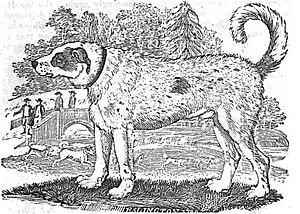
According to history, we almost didn’t have the various Retriever breeds at all. Back in the 1800s, the Newfoundland government began taxing dogs heavily. The government relied on sheep farming to support their local economy, but local dogs killed many sheep.
Therefore, the government’s proposed solution was to tax dogs and limit their presence in the community. Female dogs had a higher tax rate, so many individuals opted to keep the males and eliminate the females.
Due to the high taxation on dams, the population of St. John’s Water Dogs and their offspring dwindled to abysmal levels. While efforts were made to save this breed over the 20th century, the last two St. John’s Water Dogs were males and unable to continue the purebred population. So, they went extinct.
Quirky Fun Facts about Labradors
Labradors are well known for their intelligence, but who knew this exceptional trait would land one famed pup in jail and the other in political power? Here’s the story of Pep and Bosco, two wonderful working dogs who made history for two vastly different reasons in the 1900s.
3. A Retriever was Sentenced to Life in Prison
On August 31, 1924, the Eastern State Penitentiary received a new intake that took the prison by storm: Pep, the cat-murdering prison dog. He was sent to intake, where prison staff took his picture. His crime was recorded as murder, and he was given a life sentence.
According to Penitentiary records, Pep was a black dog listed as a Scotch Retriever. However, there isn’t exactly a dog breed called Scotch Retriever. The closest Retriever breed is the Nova Scotia Duck Tolling Retriever, but that doesn’t fit either—Tollers only come in various shades of red.
Given the account, it’s highly possible he was a black Labrador Retriever mislabeled as a Scotch Retriever. Either way, Pep’s presence at Eastern State would change the prison system forever.
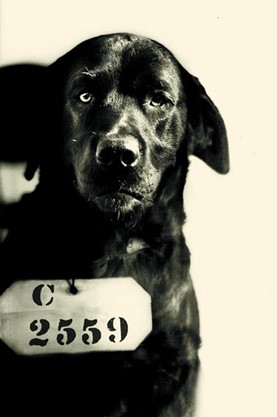
Pep was brought into the penitentiary to boost prisoners’ morale. So don’t fret—he didn’t actually take any feline lives. He spent two years at Eastern State before he was transferred to a nearby prison with acres of farmland. Here, he would live a long, healthy life bringing joy to the various inmates that worked alongside him.
The introduction of Pep into the prison helped establish programs like New Leash on Life, a non-profit organization that pairs individuals in the justice system with at-risk dogs to teach obedience training and provide socialization.
Programs like New Leash on Life are mutually beneficial for humans and pets alike. Caring for an animal can lower blood pressure, reduce stress, and decrease feelings of loneliness.
Individuals involved in the program complete their sentences while gaining valuable life skills, marketable job experience, and knowledge about dog ownership.
Thanks to Pep, the world learned just how therapeutic pets could be!
4. A Black Lab was Voted Mayor of Sunol, California
In 1981, a small town in California declared Bosco Ramos, a Black Lab and Rottweiler mix, as town mayor. The adorable pup won by a landslide, 75 out of 120 votes, promising to give every dog a bone and establish fire hydrants on each corner.
Bosco was beloved by the people of Sunol and had a reputation for being an active presence in the community. He was often seen patrolling the streets, town parks, and the local pubs, shaking paws and receiving pets for his “good boy” attitude.
Bosco remained town mayor until his passing in 1994. After 13 years of service, the town resurrected a statue in his honor and a local pub named “Bosco’s Bones and Brews.” His joyful memory lives on through the citizens of Sunol, who fondly remember their kind and compassionate canine mayor.
Genetic Facts about Labrador Retrievers
Understanding genetic inheritance can be complicated unless you’re a scientist or a dog breeder. Labradors have two different varieties (English and American) that have notable differences in their physical appearance.
Factor in the vast array of Lab coat colors—from the typical Chocolate to the elusive Silver—and things get even more challenging.
Here are some interesting facts about the different genetic variations of the Labrador Retriever:
5. The Difference Between English and American Labs
Similar to the previous facts about Labrador Retrievers hailing from Newfoundland and not the Labrador Peninsula, the distinction between English and American Labradors does not refer to where these pups reside in the world. In fact, English and American Labs have noticeably different body types.
English Labs are popular show dogs and bred specifically for their exceptional physical qualities. These pups will be bulky, with a full face and neck. They will have a thick double-layer coat with an “otter tail” that is perfect for swimming!

The English Labrador Retriever
Alternatively, the American Labs were bred to be working dogs. Compared to their English counterparts, they will have thinner characteristics, most notably in the face, neck, and tail.
These traits made the American Labradors excel at quickly retrieving fish and small game—perfect for working alongside duck hunters and boat dock workers.
While American Labs are natural athletes, that doesn’t mean an English Lab will be a couch potato. Both variations of Lab will be high-energy dogs who need regular daily exercise.
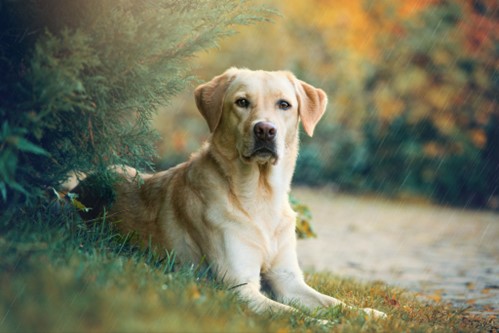
Modern-day labs are a popular breed commonly trained as search and rescue dogs, service pups, and guide dogs. So whichever variety Lab you choose, both variations will be highly intelligent, loveable, and eager to please.
6. Rare Colors of Labradors
As one of the most popular dog breeds, chances are you’ve met a Black, Chocolate, or Yellow Lab. But did you know that Labradors come in other colors like Red, Silver, and White?
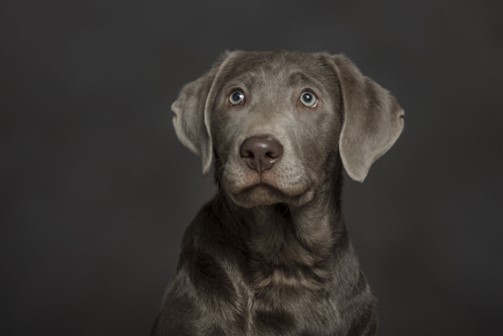
Silver Labs are the rarest color of Labradors. These stunning dogs come from Chocolate Labradors with a recessive dilute gene that weakens the color of their brown coat. If two Chocolate Labs have the dilute gene, it’s possible that their litter of puppies could contain a Silver Labrador.
The genetics behind Red Labradors are a bit more complex. These lab puppies are actually considered Yellow Labs with a dark red hue to their coat. The red color is due to pheomelanin, a pigment expressed through a puppy’s genetic code.
While these beautiful pups are unique, they won’t be winning Best in Show—dog show judges find their red hue to be a genetic fault.
Opposite of Red Labs, the White Lab is a dilute, pale-colored Yellow Labrador. It’s important to note that these beautiful pups are not Albino and therefore do not have a genetic disorder that comes with many health issues for dogs.
Conclusion
Who knew that Labrador Retrievers had such a wild history? From holding a political office to serving prison time, Labs have faced it all and climbed their way into hundreds of thousands of people’s hearts.
 About the Author

Emma is Certified Head of Training at Snowy Pines White Labs and has years of experience working with a variety of dog breeds, with titles on her own dogs in Therapy, Agility, and Protection. Emma is a CPDT-KA certified trainer as well as KPA CTP Karen Pryor Certified. This is the gold standard of training certification in the US. Her experience spans a variety of skill sets, including group training, grooming, boarding, and food research.

 Ruff Drafts
